

"Natural" Doesn't Always Mean Safe: Understanding the Rise of Kratom in Everyday Products

In the world of wellness and quick energy fixes, we are often told that "natural" is synonymous with "healthy." However, as we keep our fingers on the pulse of community safety at Thomas’ Hope Foundation, we are seeing an increasing concern across the country: the unregulated rise of Kratom.
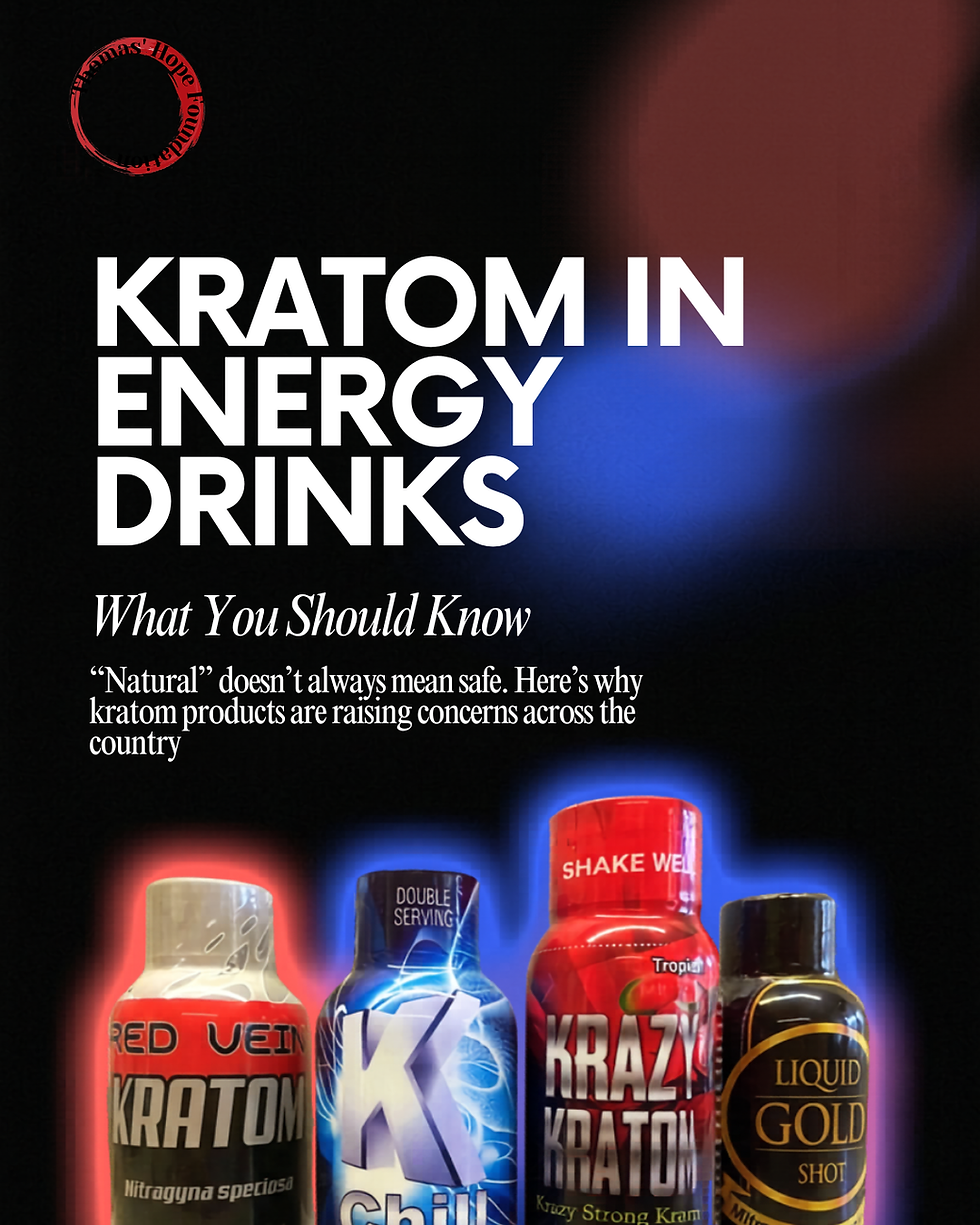
What was once a niche botanical is now appearing in gas stations, smoke shops, and convenience stores in the form of colorful energy drinks and wellness shots—often without clear warnings about what is actually inside.
What is Kratom?
Kratom is derived from a tropical tree native to Southeast Asia. Traditionally, the leaves were used for their stimulant or sedative properties, but today, it is processed into various forms for the mass market:
Powders and Capsules: Often found in supplement aisles or online.
Energy Drinks and Seltzers: Marketed as "natural energy" or "functional" beverages.
Concentrated Liquid Shots: Small vials marketed for "relaxation" or "focus".
Many of these products, such as Mitra9, Feel Free, and VivaZen, are sold alongside standard caffeine drinks, making them easily accessible to unsuspecting consumers, including young adults.
The Hidden Health Risks
The most significant concern regarding Kratom is its effect on the brain. At higher doses, Kratom can act like an opioid, attaching to the same receptors that traditional narcotics do. Because regulation is still evolving and varies wildly across different states and cities, many users are unaware of the potential for physical and psychological impact.
Common health risks and side effects include:
Nausea and Drowsiness: Common physical reactions to the substance.
Fast Heart Rate: A dangerous stimulant effect.
Dependency: Because it mimics opioid activity, the body can develop a physical need for the substance.
Withdrawal Symptoms: Users may experience significant distress when trying to stop use, similar to other addictive substances.
Why the Legal Status Matters
Currently, Kratom exists in a legal "gray area." It is often marketed with little to no oversight, allowing companies to make bold claims about "natural energy" while omitting the risks of dependency. It can show up in everyday energy products without clear labels, meaning you or a loved one could be consuming a powerful substance without even knowing it.
At Thomas’ Hope, our mission is built on education and prevention awareness. We believe that the best way to protect our community is to stay informed and start honest conversations about the substances appearing on our local shelves.
Stay Informed. Start Conversations. Save Lives.
"Natural" doesn't always mean safe. We encourage you to always check the ingredients in your energy supplements and stay wary of products marketed with little regulatory oversight.
If you or someone you know is struggling with a dependency on Kratom or any other substance, you don’t have to navigate it alone. Follow Thomas’ Hope Foundation for more educational resources, or visit our website at www.thomashopes.org to find support.
Let's work together to keep our community safe, one conversation at a time.


Comments